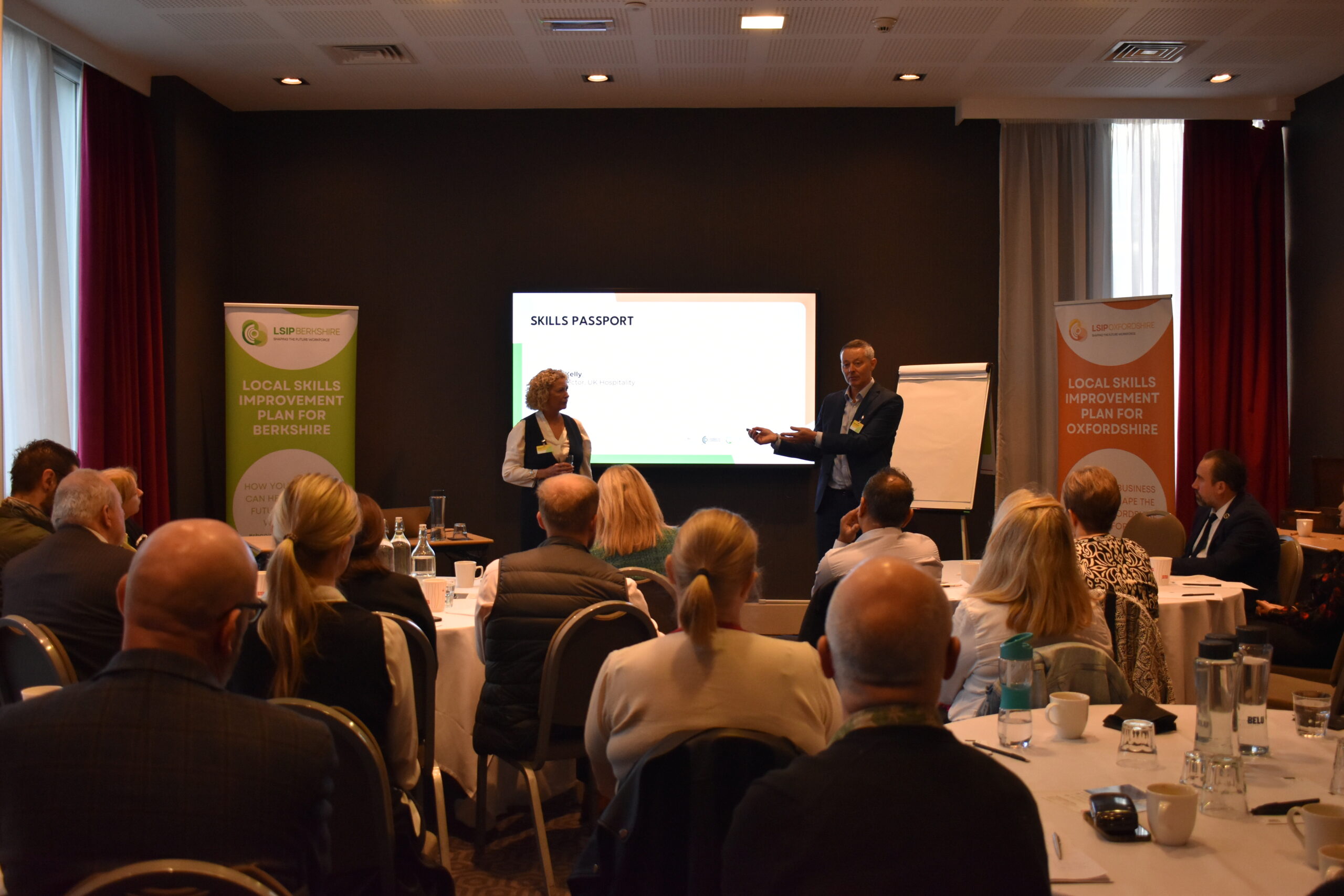
At the Hospitality and Visitor Economy Workforce Development Partnership meeting held on 30 September 2025,…


Hospitality & Visitor Economy Workforce Development Partnership
The 3rd meeting of the Hospitality and Visitor Economy Workforce Development Partnership was held at the Moxy Hotel, Slough on September 24th. There was a strong presence from employers, training providers and wider partners to progress the skills agenda for the Hospitality and Visitor Economy sector in Oxfordshire and Berkshire. The meeting commenced with a warm welcome and introduction from Sarah Powell, Le Manoir aux Quat/Saisons and Employer Champion. The purpose of the meeting was to provide a local and national picture of the skills landscape for the industry, share progress on the actions from the previous meeting and facilitate a group discussion on how best to meet employers’ skills and recruitment needs through the LSIP framework. An introduction to the Chamber and the benefits of Chamber membership followed, with an update on the Local Skills Improvement Plans, Skills England, and the positive impact the employer and training provider engagement to-date has had on the training provision in the region were shared with the group.
Melanie Sensicle, MCS provided an overview of the Berkshire Visitor Economy Framework in development, which if successful, would result in Berkshire becoming a Visit England-accredited Tourist Board.
Berkshire are working to become an LVEP (Local Visitor Economy Partnership), essential for joining the wider partnership network and could provide access to potential funding. Key priorities for the visitor economy include sustainability, year-round business, accessibility, delivering a world-class visitor experience, extending the visitor footprint, employment, careers for all and improving data and intelligence. Further collaboration on the Framework is required with completion planned for February.
UKHospitality’s Sandra Kelly, provided an update on the national skills picture and strategy for the Hospitality sector following the significant challenges the industry has faced since Covid-19, Brexit and rising industrial costs. Reference was made to the work of the Hospitality Sector Council and its objectives to professionalise the industry. 22 key objectives, include: improving entry points, qualifications, courses, and apprenticeships. The importance of creating clear routes for individuals to enter and progress through the sector was highlighted, as was the need for a sustainable workforce pipeline. Simplification in qualifications and curriculum was needed, with a focus on Levels 1,2 and 3 in colleges and the updating of apprenticeship standards. A universal entry for an apprenticeship standard was discussed, as was the need for a more integrated approach to training across the regions.
The current training provision landscape for the sector was shared with the group, with the aim of helping employers to better understand the qualifications and training provision available in the region today. Further discussions highlighted the need for a better understanding of skills funding for employers and resolution of the immigration issues currently being addressed through UKHospitality. (Hospitality is the largest sector to employ overseas workers and faces restrictions on visa routes and internships). The importance of aligning with FE colleges to ensure sustainability is included in hospitality courses was raised, as were further efforts to improve work placements, simplify processes and engage with marginalized groups. An update on the regional LSIP activity for the sector was raised and proposed for the next meeting
Edward Collett, Abingdon and Whitney College provided an overview of their collaboration with Yellow Submarine, an Oxfordshire based charity who support adults with learning disabilities and autism develop the skills to work successfully in the Hospitality sector. Details of the programme and how other employers could get involved was shared with the group.
Related Posts