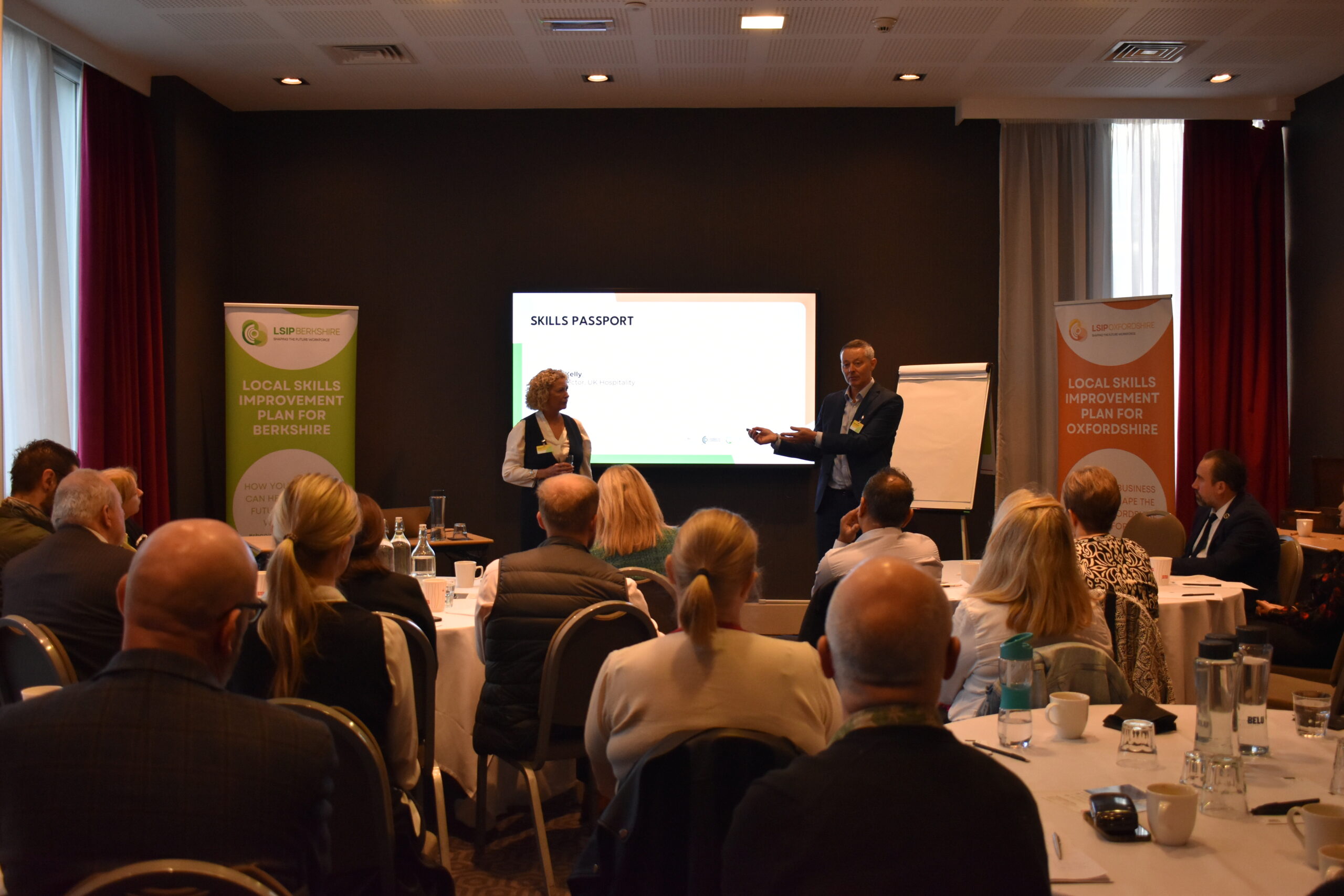
At the Hospitality and Visitor Economy Workforce Development Partnership meeting held on 30 September 2025,…

Hospitality & Visitor Economy Workforce Development Partnership
The meeting opened with a warm welcome and introductions, followed by a recap of the purpose of the Workforce Development Partnership (WDP), which continues to gain momentum across Berkshire and Oxfordshire. Attendees were encouraged to invite more employers to join the group to strengthen collaboration. Discussions revisited key skills needs, including technical and vocational skills, employability skills, and broader areas such as finance and leadership. While larger organisations have become more effective at managing skills and recruitment internally, smaller businesses require further support, particularly for entry-level roles, which remain the hardest to fill. Engaging SMEs through trade bodies and promoting the benefits of college partnerships were identified as key priorities.
An update on the hospitality sector included the launch of Missenden Abbey International Hotel and Hospitality School by Buckinghamshire New University, offering students a combination of practical and classroom-based training with paid placements. The University is working closely with UK Hospitality and exploring progression routes beyond Level 4. However, the introduction of the T-level in catering has been postponed beyond 2024, with no confirmed timeline for its rollout.
Work experience programmes were discussed, with an emphasis on developing soft skills through hands-on experience. Employers visiting schools and colleges to reinforce the importance of these skills was seen as particularly impactful. It was suggested that provider staff should spend time in hospitality establishments to gain a better understanding of industry requirements. Structured frameworks for work placements, pre-placement engagement, and gathering feedback from both students and employers were highlighted as ways to improve the effectiveness of placements.
Recruitment challenges in grounds maintenance were raised, with a shift in the role towards a more creative skillset. A decline in interest was linked to changing leisure activities among young people, and training providers noted difficulties in delivering horticulture courses due to curriculum changes and a lack of student demand.
It was noted that skills bootcamps are often more suited to those already in the industry rather than new entrants. Small businesses, in particular, face barriers such as funding, time constraints, and awareness of training opportunities. Employers were encouraged to engage with Berkshire LEP to support the case for a hospitality bootcamp and to ensure sector needs are reflected in bootcamp curricula. The LSIP progress report may include a recommendation for hospitality bootcamps in Berkshire.
Mentoring initiatives were explored, with Adviza developing a programme to match young people with employer mentors. While OxLEP has an existing mentoring scheme, engagement remains low, and its structure may need review. Ensuring initial student interest before mentoring begins was seen as key to success.
The importance of promoting the sector and sharing its values, opportunities, and career pathways was highlighted. Experience Oxfordshire was suggested as a potential platform for outreach, alongside leveraging existing networks and social media to enhance visibility.
Engagement with hard-to-reach groups was discussed, with Adviza working on an employer-led programme to support talent pipelines, particularly for entry-level roles. Employers were encouraged to participate in this initiative.
Agreed actions included: expanding engagement in the WDP through wider networks, outreach to UK Hospitality and Experience Oxfordshire, a coordinated communication campaign on opportunities within the sector, employer involvement in shaping bootcamp curricula, and further development of work experience programmes to support Level 1 students.
Related Posts