



Construction & Built Environment Workforce Development Partnership
An enthusiastic group of employers, education & training providers, and strategic partners attended the first Construction and Built Environment Work Force Development Partnership (WDP) meeting last Thursday, November 23rd. Held at Donnington Valley Hotel, Newbury the session opened with an update on Local Skills Improvement Plan (LSIP) activity by Simon Barrable, LSIP Engagement Officer. This focused on LSIP activity on workforce development and planning, including skills needs for the sector, and how we can cooperatively do more to meet these.
Next up was an informative presentation from Elizabeth Steel, Customer Engagement Manager for the Construction Industry Training Board (CiTB). She covered the national picture on skills needs and what the CiTB is doing to help meet these. Lawrence Wright, Helix New Business Manager and LSIP Construction Employer Champion then delivered a thought-provoking piece on what the sector needs to do differently to start attracting the very best talent.
There followed an energetic discussion on skills needs and what this new partnership can do to help meet these. This included informing and inspiring people about work in the sector, a role mapping exercise for the industry locally, and working on better matching education and training provision to local employer needs.

Skills training to be transformed with hundreds of innovative projects
- People across the country are set to benefit from more skills training that will help them launch careers in key industries, including in the growing green sector.
- £200m will support local areas to offer more high-quality training opportunities to meet local skills needs, including apprenticeships and Higher Technical Qualifications.
- Part of government drive to get more people into good jobs close to home, plug skills gaps and grow the economy.
People seeking careers in growing sectors such as green energy, digital and construction will be able to access improved skills training, helping them secure good jobs closer to home.
More than £200 million has been announced to support colleges and universities to offer more training opportunities in key industries, such as the growing green sector. Investment is being targeted to address the specific skills needs of each region, which local businesses and employers have identified as priority sectors in their Local Skills Improvement Plans (LSIPs), giving them access to the skilled workforce they need to grow.
Paul Britton, CEO, Thames Valley Chamber of Commerce said: “Skills and workforce development are important to everyone’s business and that is why Chambers of Commerce are bringing business and training providers and educators together.
“The Thames Valley Chamber of Commerce Thames Valley Skills Unit is responsible for Berkshire and Oxfordshire and the crucial factor is that LSIPs are employer-led and locally owned. We have been able to use our reach to speak to over 1000 businesses and our aim remains to ensure that investment in skills – by government, employers, training providers, careers services and individuals – is properly aligned to achieve the best outcomes for everyone.
“We welcome this announcement and by continuing to bring employers and training providers together locally to identify solutions and plan for change, means we can make education and skills provision more responsive to the changing needs of our businesses and the local economy”.
Gillian May, Principal, The Windsor Forest Colleges Group said: “We are thrilled to have been awarded a substantial investment in Windsor College. This investment signifies a pivotal moment for the advancement of training within the screen industries as we embark on a transformative journey that will reshape skills training for both young people at the start of their career and those seeking to upskill. Aligned with the government’s commitment to fostering talent and addressing critical skills gaps, this funding will elevate Windsor College to a hub of excellence for the screen industries. This forward-looking approach will ensure that employers and students can access top-tier training, securing fulfilling employment in our local communities.
We extend our gratitude to Thames Valley Chamber of Commerce and our employer partners for their support and insights and their dedication on this employer-led initiative. This investment represents more than a financial commitment; it embodies a strategic vision to futureproof our economy and empower the next generation with essential skills for success”.
Jane Gratton, Deputy Director of Public Policy at the British Chambers of Commerce, said: “Businesses are crying out for more people with technical skills to fill the great jobs we have today and new ones in the developing green economy. It’s vital that everyone can access the training they need locally to grasp these opportunities.
“Business-led LSIPs are setting out the skills needs and opportunities, and this new funding will ensure the right training solutions are put in place.”
As part of the government’s work to support more people to gain the skills they need to secure rewarding careers, the British Chambers of Commerce and other employer representative organisations were commissioned to lead work to develop local skills improvement plans, published in the summer, so the training on offer better meets the current and future skills needs of local areas.
The investment in local areas is just one way the government is boosting skills, alongside a huge range of other high-quality programmes including T levels, free courses for jobs and Skills Bootcamps.
Education Secretary Gillian Keegan said: “This investment is about boosting local industries, building people’s skills and ultimately futureproofing our economy and the career prospects of the next generation.
Our local skills projects will bring together regional organisations, businesses and education providers to respond to the specific needs of employers, building an increasingly skilled workforce and growing local economies.
Whether it is green skills, construction, engineering or digital, thousands more people can now gain the skills they need to secure good jobs closer to home. These are long-term plans that will ensure every area can have a brighter future.”

Shaping The Future Workforce
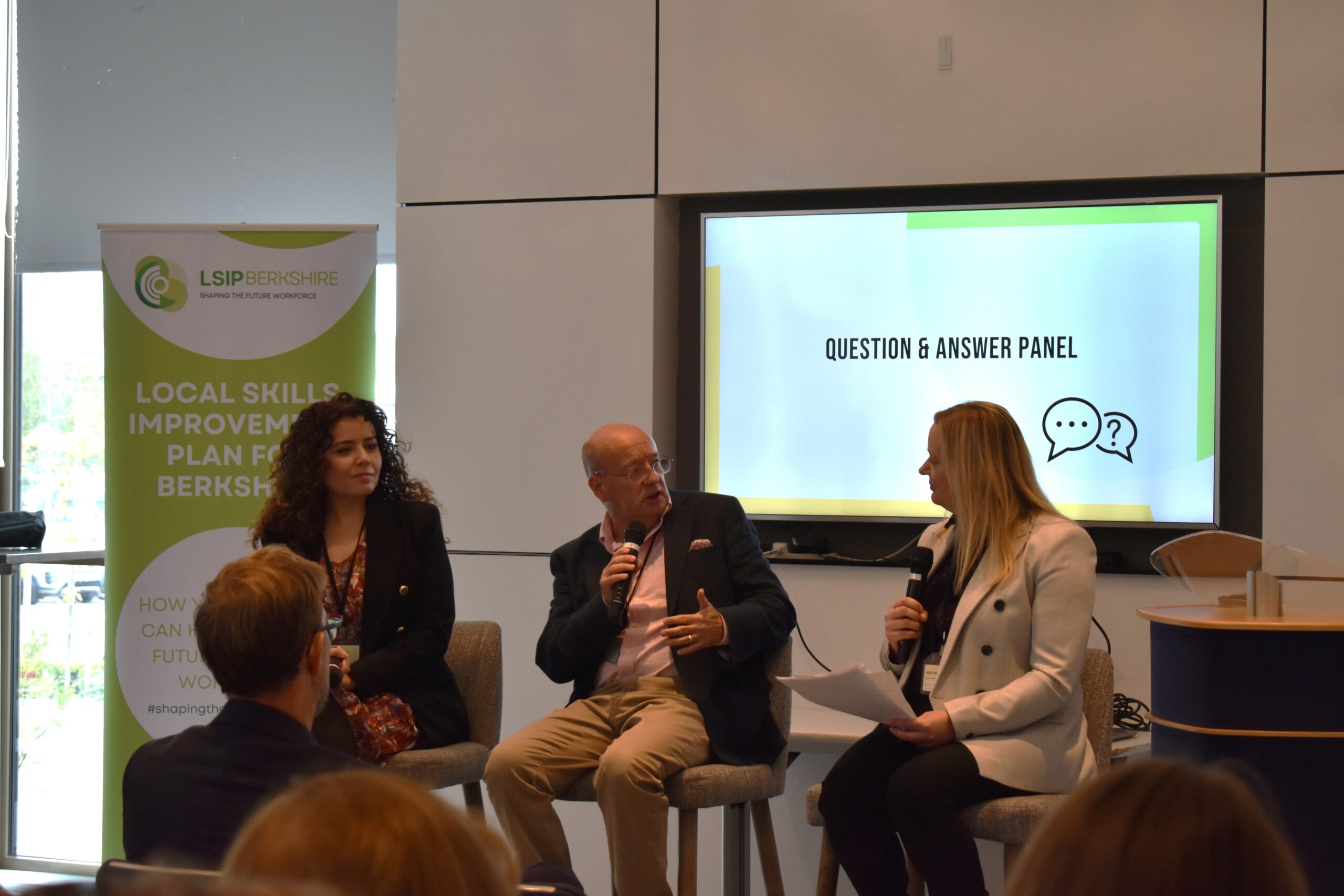
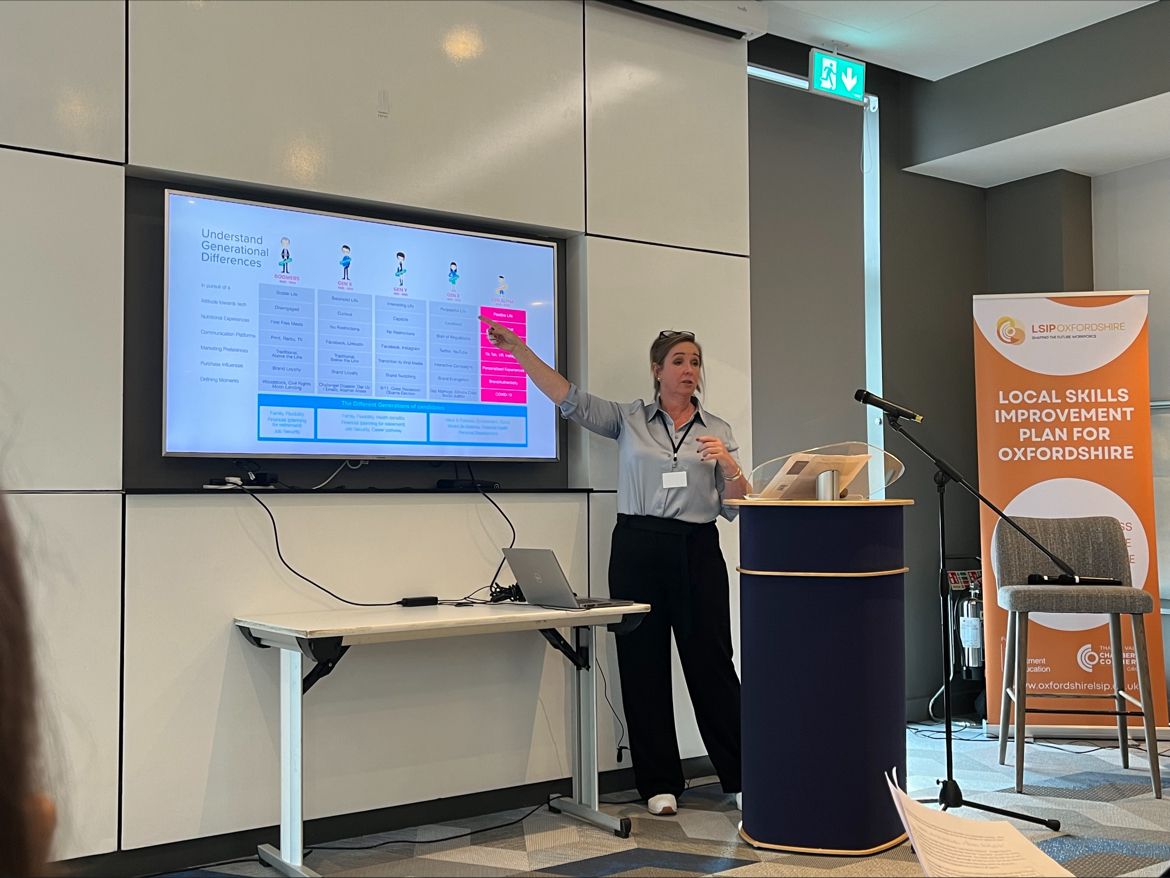
The Thames Valley Chamber of Commerce Skills Unit was delighted to run a ‘Shaping the Future Workforce’ event at the The Courtyard by Marriott, Oxford South on October 5th. Facilitated by the excellent Victoria Freeman, Director for People & Training of the award-winning Thomas Franks Ltd, the room was full to capacity with businesses from across Oxfordshire and Berkshire, a wide range of education and training providers, and numerous other strategic partners. They had all come together to hear a range of expert input into all things ‘workforce development’ at a time when recruitment and skills have never been higher on the agenda for business leaders.
The first session covered the current challenges around recruitment and retention. Sarah Stevens, Managing Director of SYLO Beyond HR focused on the needs and motivations of different generations in the workforce. Only by understanding these can businesses build successful recruitment, retention, and talent management strategies.
Holly Norrington, HR and Training Manager for Thomas Franks built on these themes by looking at the importance of promoting and supporting the internal development of employees. When potential employees can see really clear development opportunities across a business, they will be more motivated to apply for roles and are more likely to be retained. Tanya Jenkins, Director of OE & Strategic Projects at Lonza rounded this session off with a look at the importance of building cognitive diversity through businesses to bring innovation and sustainability.
The next session covered leadership with Dr Loua Khalil from Henley Business School bringing an academic perspective on what leadership is and its critical importance to business success. This was complimented by the session from Derek Peaple, Managing Director of the Leading Peaple Company, who drew on his own leadership experience in running a large secondary school and the lessons that can be applied to business and leadership more widely from this.
The final session covered the key Local Skills Improvement Plan theme of ‘Digitisation’. Dr Mona Ashok from Henley Business School took us through the barriers to the adoption of greater digitisation, but more crucially the key benefits of doing so in the fast-moving technological changes in the 21st-century business environment. Andrew Barnett from BCS, the Chartered Institute for IT explained the wide-ranging practical help and support his organisation can provide businesses on their digital journey. The session was rounded off by Somayeh Aghnia, CEO of Geeks Ltd, who went through what the future of business is likely to look like in a world increasingly impacted by developments in AI entitled ‘Dare or Die, Digital Evolution in the AI Age’.
With a lively networking lunch and Q&A sessions between each topic, the day contained practical advice and thought-provoking ideas. It also provided a chance for businesses, and those that help to meet their skills needs, to come together and reflect on the future development of the workforce across Oxfordshire and Berkshire.
Empowering Oxfordshire Businesses
Thames Valley Chamber of Commerce is the voice of employers, industry and business and part of a national Chamber network delivering the majority of Local Skills Improvement Plans across England.
Our Thames Valley Skills Unit has engaged with over 1,000 employers across Berkshire and Oxfordshire to understand what matters most to industry and business and the skilled workforce they need.
Our launch event this September hosted over 70 attendees from across the county to hear our speakers including some of our fantastic employers such as Dominique Unsworth, Charlie Walker and Callum Stott.
Watch the video to learn about the impact of our Local Skills Improvement Plan and our plans for the next year.

Local Skills Improvement Plans Reports for Berkshire and Oxfordshire launched
Thames Valley Chamber of Commerce (TVCC) has reached a significant milestone in the regions pursuit of enhanced skills and workforce development.
The recently approved Local Skills Improvement Plans (LSIP) Reports for Berkshire and Oxfordshire mark a momentous step forward in aligning education and training with the evolving needs of the local economy. These comprehensive reports are the outcome of an extensive collaborative effort, bringing together key stakeholders, including local employers, FE colleges, training providers, and more, under the direction of the TVCC LSIP team.
The LSIPs are the result of a collective endeavour aimed at facilitating a deeper engagement between employers and training providers. By fostering a dynamic exchange of ideas, insights, and requirements, the reports have successfully identified pivotal areas for transformation. A ground breaking traffic light system has been employed to spotlight gaps in skill provision and foster opportunities for the joint development of a cutting-edge curriculum.
This ground breaking initiative has attracted a broader spectrum of employers to the conversation, ushering in a new era of collaboration that poised to reshape the skills landscape. Moving forward, the focus remains on executing actionable steps that will catalyse enduring transformations which are –
- Virtual Guide for Employers: Recognising the complexity of the skills ecosystem, the LSIP’s are committed to launching a user-friendly virtual Guide. This tool will empower employers to navigate the intricate terrain of skill enhancement effortlessly.
- Workforce Development Partnerships: Believing that true progress stems from the constructive collaboration between industries and educators, we are initiating Workforce Development Partnerships that will serve as dynamic platforms for industry professionals and educators to collaboratively surmount skill-related challenges.
- Revolutionising Education and Training: The LSIP reports have unveiled a roadmap for the co-development of novel education and training provisions. This forward-looking approach ensures that the workforce remains adaptive and well-equipped to address the evolving demands of the local economy.
Paul Britton, CEO, TVCC said, ‘The publication of the LSIP reports is part of a wider transformation in skills and training provision. The most exciting aspect in this specific piece of work is the new connections that have developed with the local business community and local education providers. The Chambers role has been to facilitate these new connections and find a common language to support the co-development of new, modular courses and curriculum.
“As we embark on this transformative journey, we extend our gratitude to the collaborative efforts of all stakeholders who have contributed to the fruition of the LSIPs. Together, we are poised to elevate our region’s workforce and usher in a new era of skill excellence.”